The Common Belief vs. Reality
There are several bean species but the most common with worldwide supply are Arabica and Robusta. The common belief is that light roast has more caffeine than dark roast. What really matters when comparing "more caffeine" is the bean species and the way you brew your coffee.
| Bean Type / Roast | Avg. Caffeine (%) |
|---|---|
| Arabica | 1.2% – 1.5% |
| Robusta | 2.2% – 2.7% |
| Light Roast Arabica | ~1.13% |
| Dark Roast Arabica | ~1.08% |
Key Factors That Affect Caffeine Strength
Bean Species
Robusta naturally contains significantly more caffeine (2.2–2.7%) than Arabica (1.2–1.5%). Most high-caffeine brands use Robusta for its kick and Arabica for smoother flavor.
Measurement Method
By volume (scoops): light roast is stronger because beans are denser. By weight (grams): dark roast is slightly stronger because more beans are needed to reach the same weight.
Brewing Method
Long steeping extracts more caffeine. French press (~105 mg), cold brew (100–200 mg), standard drip (~95 mg). Brewing method matters more than roast level.
Cold Brew: The Caffeine Champion
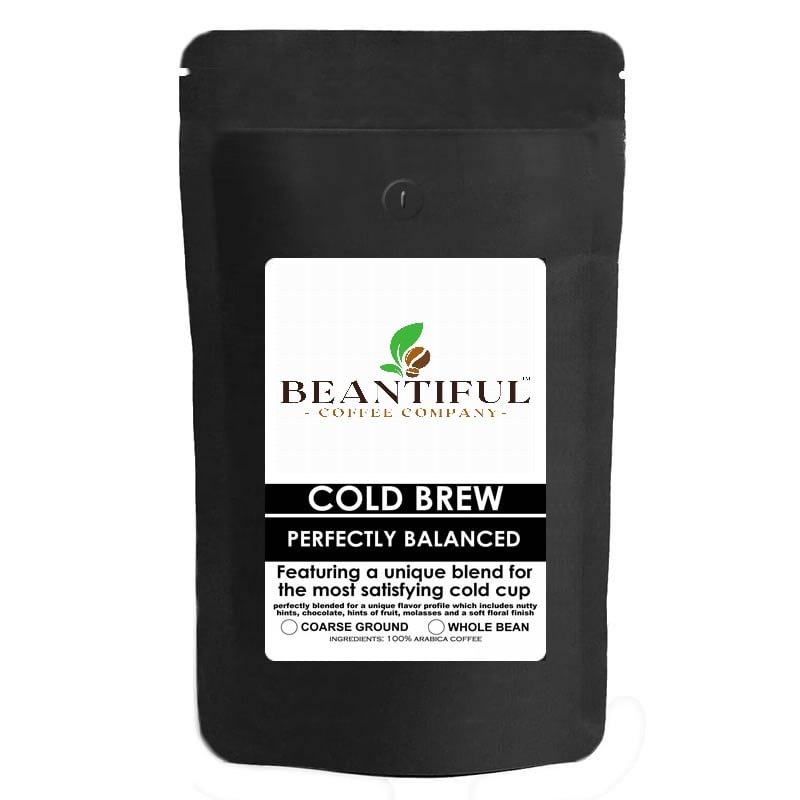
Cold brew coffee uses coarse grounds steeped in cold water for 12–24 hours. This long extraction pulls significantly more caffeine than a standard drip coffee. A cold brew can contain 100–200 mg of caffeine per 8-oz serving, compared to ~95 mg for drip.
Our Cold Brew Blend is specifically engineered for this brewing method — extra dark roasted from a secret recipe of African and Central American beans, blended for unmatched depth whether served cold or hot.
The Roasting Myth vs. Reality
A common myth is that roasting "burns off" caffeine. In reality, caffeine is extremely heat-stable and survives the roasting process with very little loss (roughly 1% or less).
| Roast Level | Avg. Caffeine % |
|---|---|
| Light Roast | ~1.13% |
| Medium Roast | ~1.17% |
| Dark Roast | ~1.08% |
Highest Caffeine Arabica Varieties
All our coffees use 100% Arabica beans — the best-tasting bean. Mixing Robusta dramatically changes the flavor. We wanted stronger coffee without sacrificing taste, so we researched the highest-caffeine Arabica varieties available.
| Arabica Variety | Avg. Caffeine % |
|---|---|
| Ethiopian Heirloom | 1.1% – 1.5% |
| Bourbon | 1.1% – 1.7% |
| Typica | 1.2% – 1.5% |
| Colombian Arabica | Up to ~1.7% |
| Geisha | 0.9% – 1.3% |
| Laurina (Bourbon Pointu) | 0.3% – 0.6% |
Caffeine in Green (Unroasted) Beans
For the curious: here's how different green bean varieties compare before any roasting happens.
| Bean Variety | Caffeine per gram | Caffeine % by weight |
|---|---|---|
| Peaberry Robusta | 24–27 mg/g | 2.4%–2.7% |
| Standard Robusta | 22–27 mg/g | 2.2%–2.7% |
| Standard Arabica | 12–15 mg/g | 1.2%–1.5% |
| Bourbon Arabica | 14–18 mg/g | ~1.4%–1.8% |
The Bottom Line
Bean species matters most. Robusta has nearly double the caffeine of Arabica. But it also tastes dramatically different — harsher and more bitter.
Brewing method is the real lever. Cold brew and French press extract far more caffeine than standard drip, regardless of roast level.
Light vs. dark roast is mostly a myth. The difference is minimal. Measure by weight for slightly more caffeine in dark roast; measure by volume (scoops) for slightly more in light roast.
We use 100% Arabica. We choose the best-tasting bean — and find the varieties and brewing methods that maximize strength without compromising flavor.